

The "Always Producing" Paradox
From tech product marketing to full-time creating: Why following the Paul Graham gospel turned my curiosity into a chore—and how I’m reclaiming the right to be a slow thinker.

There is a specific kind of exhaustion that comes from learning only so you can teach, and consuming only so you can create.
It’s the paradox of the modern creator: the more ‘productive’ I am with brand deals and content calendars, the less space I have for the very curiosity that made me quit my job in the first place.
When I left my 8+year career, most recently in tech product marketing, I thought I was escaping the ‘machine.’ At least for awhile.
I followed the Paul Graham gospel: do work you love, and never stop producing.
And produced I did. And I loved it.
The newfound energy of saying yes to everything and pursuing creative pursuits was riveting.
I produced short-form. I learned and gained inspiration by others in the field. I travelled a ton. Then I created more.
But over six months into the creator economy, I’ve realized a sobering truth: the machine didn’t fully disappear—it just changed.
And it’s not a bad thing. But it’s worth reflecting on.
The honeymoon of quitting
The initial rush of quitting has its highs for sure. Handing in the resignation letter, telling your manager. The idea that you could work on anything and everything. After all, the world is your oyster.
Reading Paul Graham’s reflections on doing work you love helped solidify the fact that always producing is both a solution and a defence mechanism to procrastination. After all, procrastinating in your 9-5 is yes, frowned upon, but not detrimental. But procrastinating when you technically “work for yourself”? Well that’s no bueno.
Building momentum
I was on a honeymoon high. So, what did I do?
The professional push
Right off the bat I was drawn to finding a community and some sort of structure. I started meeting my good friend Angel weekly to discuss content creation—an area I have been interested in for some time (since 2018!)
Together we built Kinship Club—a community for the ambitious in Vancouver. We co-hosted local events throughout Vancouver that summer to bring together creators, entrepreneurs and the builders of our community.
Submitted Kinship’s early beginners to a startup accelerator (and did not get in). Learned about how to pitch, what to focus on in the early days of building and scaling a small biz.
A few months later we pivoted Kinship to digital and launched our Discord community. We ran polls to gather what folks would want to see more out of Kinship in the coming months and worked on the first rounds of what a community membership could look like.
I dove head first into content creation. I had a goal to hit 5K followers on Instagram which I surpassed just recently (as of January).
I received a few inbound leads and started pitching, but quickly started to realize the effort it takes.
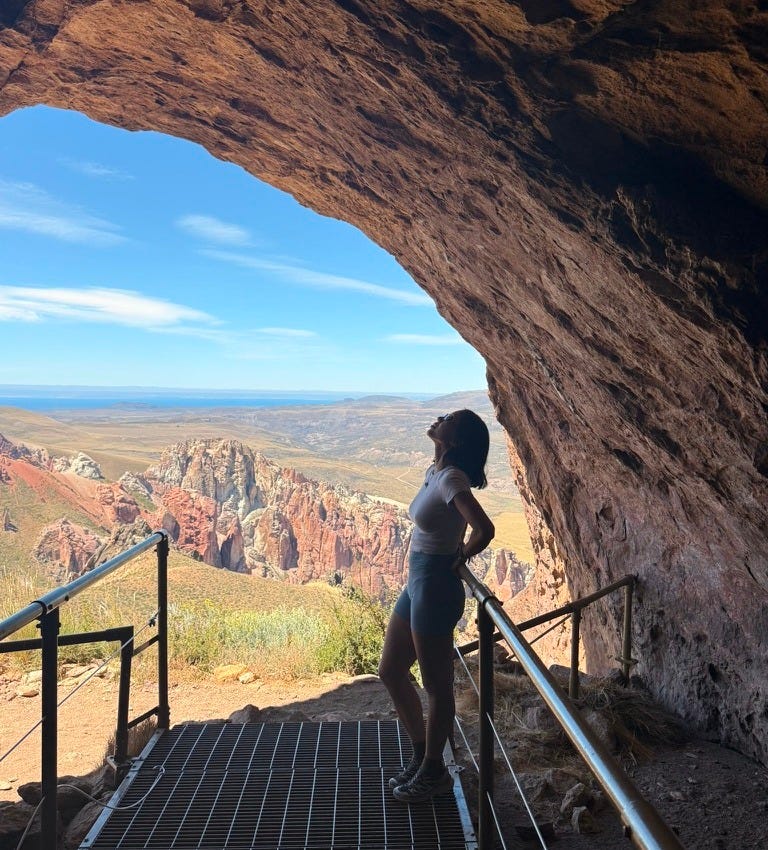
I tested On Bento, an automated pitching platform and used their Virtual Assistant to test outreach using AI rather than doing it myself during the month of January (this worked well as I was off living in a van somewhere in Patagonia).
Physical mastery
I taught a ton of yoga and practiced on my own even more. I started to teach weekly classes at a local hot yoga studio which I thoroughly enjoyed. I especially enjoyed it when I started to know the regulars by their first name.
I learned how to kiteboard—a sport that I would not even think was in my bingo cards this past year. There’s not a lot of places in the world where the winds are consistent enough for kiting so it makes a ton of sense.
The cultural intake
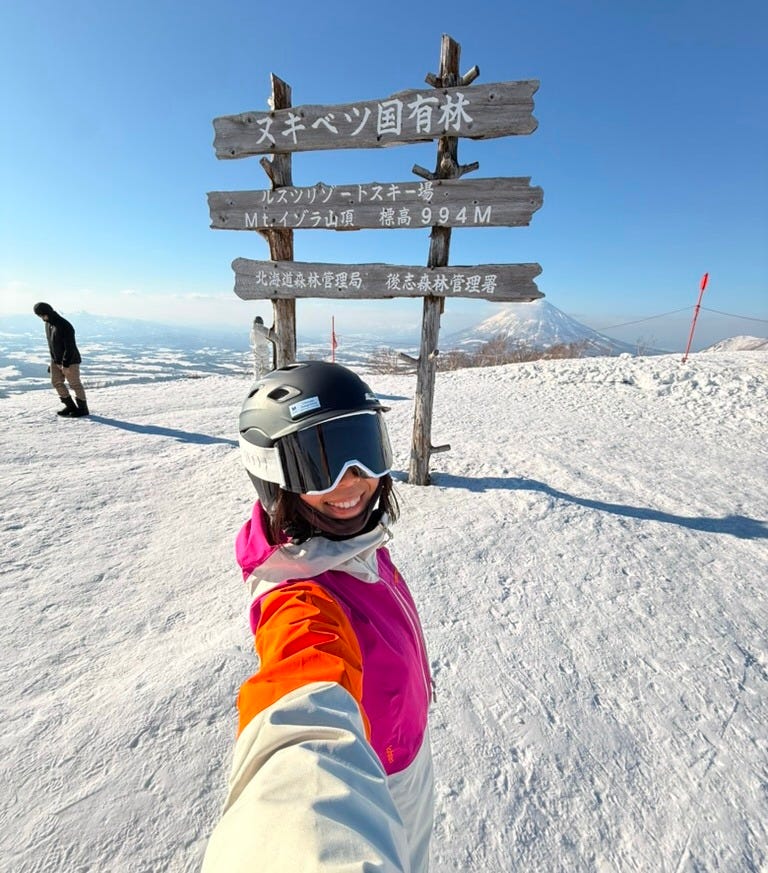
I traveled a ton—4 international trips (Colombia, Hong Kong & Shanghai, Chile & Argentina, and Japan) and 3 local ones to Jordan River and Nitinat Lake here in British Columbia.
Looking back… yeah, thats a LOT. I’m proud of everything I tried, tested and boy, did I learn so much about myself, my desires and my nature.
Despite all of this, deep down I knew something was still missing.
The brand blur: billboard vs. building your own brand
Somewhere between all of the content creation, slow travel (I’m writing this as I’m in Hokkaido, Japan), and reflecting on big questions I often avoid, I started to wonder.
What is the delicate balance of “content” and “creation” and when do you know the balance is off? For me, I noticed it’s when:
curiosity starts feeling like a chore
when posting a brand asset feels counter-intuitive to what I want to say or share that day
I look at my feed, and I don’t feel fully proud of what I’m seeing
I can’t help but to think about engagement & likes before I even post
Another way of putting it is… did I want to become solely a billboard for brands or do I have a desire to build my own?
The solution
I don’t know what the right answer is to this insight. But I do know one thing.
Insights are important. They can come at any time and are a byproduct of constant action. Insight is useless when recognized but left abandoned. It’s most productive when time to reflect on it is intentionally carved out, and lessons are derived from it.
One lesson that came out of this insight is that I’ve spent so much time creating short-form content when I know deep down: I’m naturally inclined to create long-form. I am a yapper through-and-through and short-form has proved challenging in some ways, but also beneficial for my learning.
A great example is a 30-day challenge I placed on myself back in October to publish one short a day in a series called ‘The Daily Shift’.
The series was to help my audience pause the scrolling for a bit and shift their focus to living a more mindful and intentional life.
It was incredibly insightful as a newbie creator to complete the end-to-end creator process of research/ideation, scripting/writing, filming, editing and publishing. However I would have much rather shared even more of me in those videos in long-form. Short form is all about performance. The algorithm boosts videos that are under one minute and quick to provide value. While those are important, I recall naturally having more to share on that topic (it was on mindfulness—one that I’m passionate about).
So maybe that’s what the solution is. It’s not to stop creating, but to allocate time for thoughtful long-form. Creating a “one for them, one for me” boundary and reclaiming the right to be a slow thinker again, one long-form reflection at a time.