

On tending something daily
What three months on the road taught me about what it actually means to be well

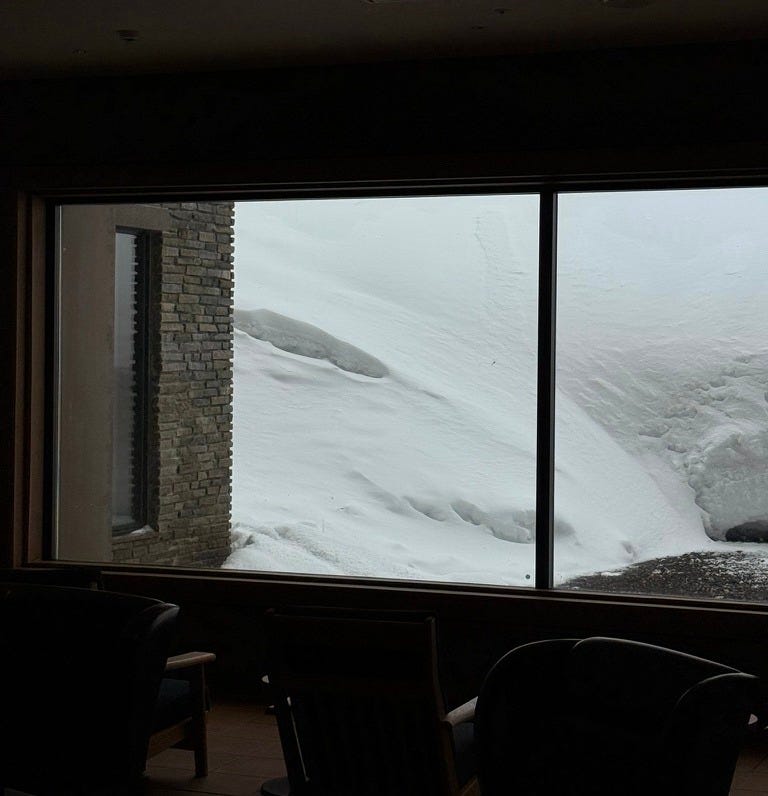
It was a Tuesday evening in Asahikawa, and I was the only person in the onsen.
Hotel Bearmont sits at the foot of Asahidake — Hokkaido’s tallest volcano — and the Asahidake public onsen was a short walk away. I was sitting in a sauna moving through contrast therapy.
Cold, then hot, then again. Steam rising. Snow on the ground. The kind of quiet that only exists when you’re somewhere genuinely remote and the temperature makes staying still feel like the only sensible option.
I don’t remember what I was supposed to be thinking about. What I remember is the question that came up instead when you let your mind wander: what does it actually mean to be well?
Not in theory. In my actual life. Right now.
What I mean when I say wellness
The Global Wellness Institute defines wellness as “the active pursuit of activities, choices and lifestyles that lead to a state of holistic health.” I’ve always liked that word — pursuit. It implies motion. Intention. Something you move toward rather than arrive at and unpack.
But sitting in that onsen, I kept coming back to something the definition doesn’t quite name: balance.
Because here’s the thing — ‘holistic’ is too vague, and wellness isn’t just one thing. It’s a whole ecosystem of dimensions, and most of us are only tending one or two of them at a time:
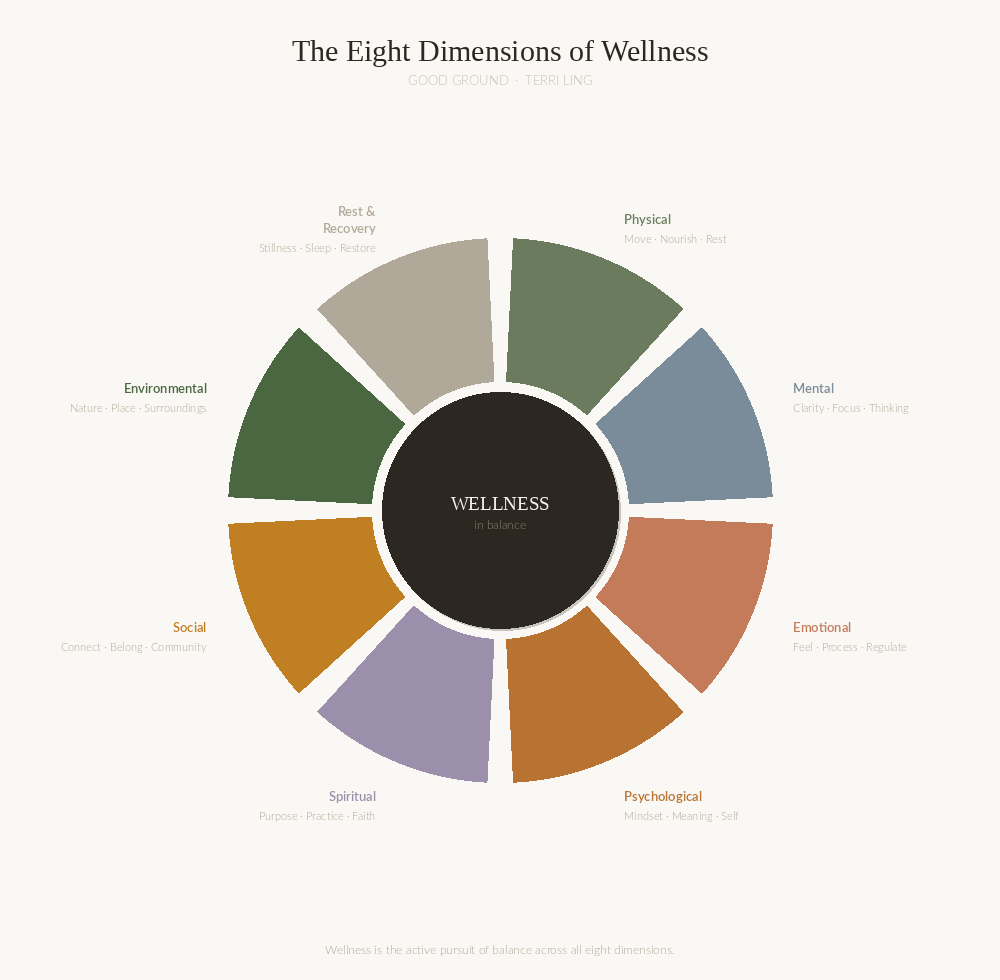
Physical wellness — how you move, nourish, and rest your body
Mental wellness — cognitive clarity, focus, the quality of your thinking
Emotional wellness — how you process feelings, navigate stress, and regulate your reactions
Psychological wellness — your mindset, your relationship with yourself, your sense of meaning
Spiritual wellness — connection to something larger than yourself, whether that’s faith, nature, practice, or purpose
Social wellness — the quality of your relationships, your sense of belonging, the people you’re tending alongside
Environmental wellness — your relationship with your physical surroundings, and how being in nature (or not) affects everything else
Rest and recovery — not just sleep, but the kind of stillness that actually restores you
The honest question isn’t am I well? It’s which of these am I actually tending — and which have I quietly dropped?
I was on the trip of a lifetime. I was driving through some of the most stunning landscapes I’ve ever seen, getting engaged on a farm along the Carretera Austral, skiing in Hokkaido. By every external measure? Thriving.
And yet. There were stretches where I felt genuinely off — not unhappy, but unmoored. Because physically I was doing incredible things, but at times mentally and psychologically I was running on fumes. The reflection time had reduced dramatically. The stillness was gone. The practices that keep me grounded had quietly fallen away — and I felt it, even in the middle of an extraordinary adventure.
That’s the thing about wellness as balance. You can be winning in one dimension and quietly unravelling in another. It doesn’t feel good, even when life looks great from the outside.
On holding things lightly
There’s a Taoist parable I keep returning to — it’s one my favourite especially as a yoga practitioner.
A farmer’s horse runs away. His neighbours say: terrible luck. He says: maybe. The horse returns, leading a herd of wild horses. Wonderful luck! Maybe. His son tries to ride one, breaks his leg. Terrible! Maybe. War comes. His son, unable to fight, survives.
The point isn’t that everything works out. The point is equanimity — the capacity to meet the good and the difficult with the same steadiness. To not be levelled by either.
To me, that’s wellness at its most honest. Not the absence of hard things. The ability to hold them without being swept away. Psychological and emotional wellness, more than anything else, is what makes that possible. And it’s almost always the first thing to go when life speeds up.
The road test
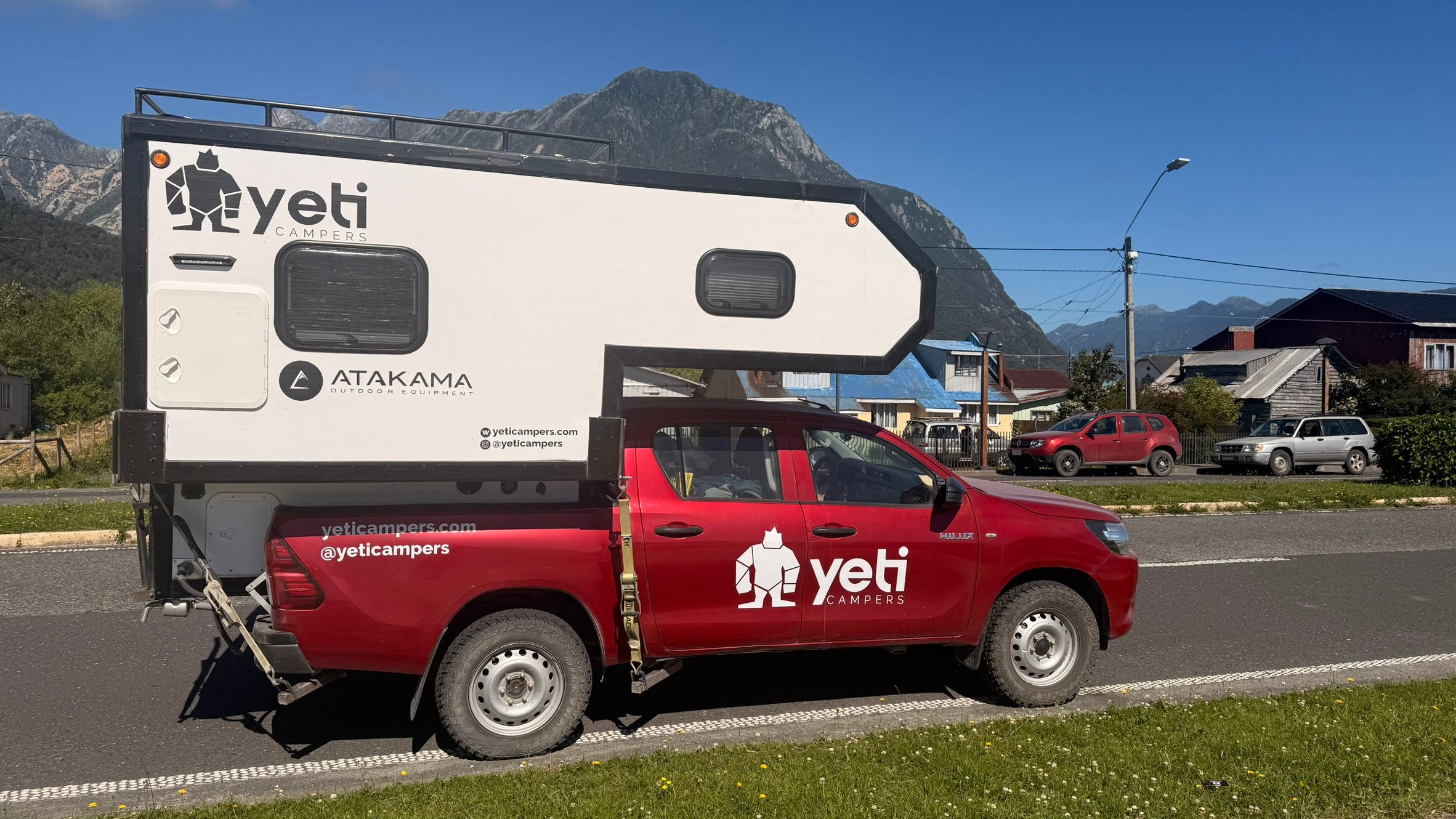
Three months on the road will teach you exactly what you’re actually committed to — because the excuses disappear. Nobody’s stopping you from meditating in a van. The time is there. The question is whether the intention is.
I bought a $20 yoga mat in Puerto Varas in Chile during the start of our van trip with full intentions of maintaining a daily practice.
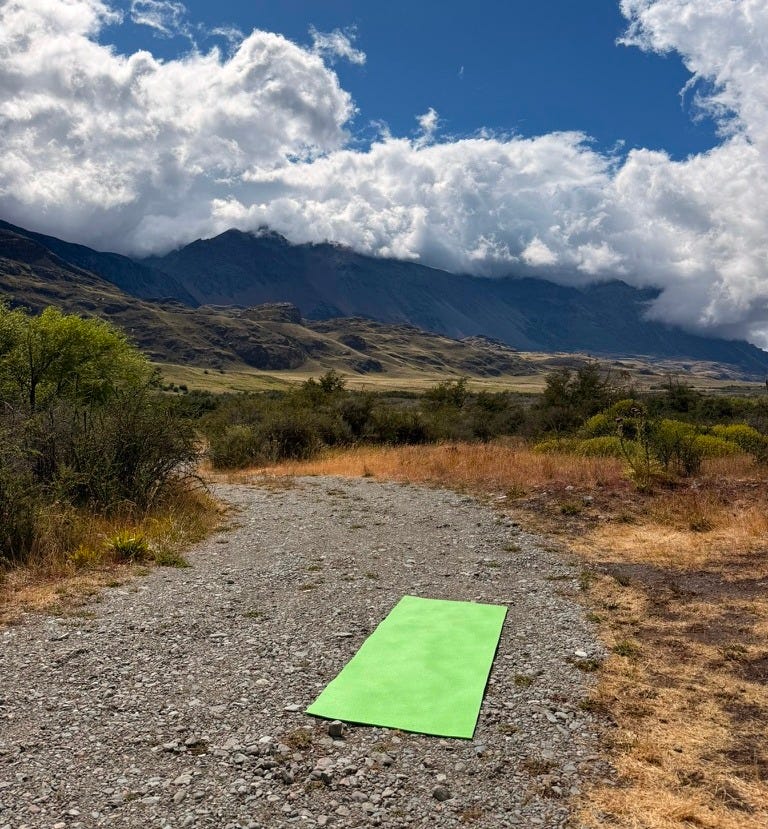
In total, I used it three times.
In my defence: it was coliguacho and mosquito season. These are the Chilean equivalent of horse flies and biting midges — so small they fit through standard mosquito netting. Every single time I unrolled that mat, they found me within minutes. My YYOGA At Home subscription (which I genuinely love) went mostly untouched. The movement dimension of my wellness? Not my finest chapter.
What habits actually made it
What survived instead surprised me.
Journalling
Because you can do it inside, away from the midges and horseflies, and because writing has always been less about documentation for me and more about thinking. When life is moving fast — and driving a camper van through Patagonia, then pivoting to ski season in Hokkaido, life moves fast — writing slows it down.
I combined paper journalling for the thinking work with the Justly app for the emotional work. At the time, Justly was genuinely helpful for processing anxiety and difficult feelings on the go.
Writing encourages thinking. Thinking is reflecting. Reflecting, it turns out, is a wellness practice that serves multiple dimensions at once — emotional, psychological, mental, all of it.
Meditation
What made it work on the road was rhythm, not discipline. In the van, I’d meditate shortly after breakfast and coffee. Same time, same seat, same window view. (I currently use Insight Timer) My friend Angel once said something I’ve carried with me ever since from one of Jay Shetty’s podcast episodes: location has energy, time has memory. When you do something in the same place at the same time, you’re not starting from zero. The space and the moment hold the intention for you.
Two practices. That’s it. But they were enough to keep the psychological and emotional dimensions from fully collapsing — even when those ones or others took a hit.
The quieter version
I’ve been back in Squamish for a few days now and the routine I wanted to build on the road is slowly taking shape. Easier here, with a kitchen and no midges.
Most mornings start with warm water, lemon, and freshly grated ginger. Simple, but a few things make it actually stick. I cut lemon wedges the night before so there’s nothing standing between me and the ritual at 7am. The ginger lives in the freezer (Pro tip: freezing it boosts the shelf life dramatically and means you can grate it straight from frozen — no peeling, no chopping, no reason to skip it). Another thing worth knowing: don’t use boiling water. High heat depletes some of the key nutrients in lemon, particularly Vitamin C. Warm water only.
From there: sauna, when the week allows. Movement. Writing. The micro-practices that don’t individually look like much but, accumulated over time, constitute something I actually recognize as myself.
What the road taught me is that tending something daily takes intention — and trade-offs, and choosing the harder thing when it’s easier to skip it. That’s not so different from how most of us live. Whether you’re navigating childcare or a 9-5 or just the general weight of being alive right now, the conditions are never perfect. They’re just yours.
A small audit
Here’s the question I want to leave you with — the same one that surfaced for me in a steam-filled onsen with a volcano in the background:
What does wellness actually mean to you?
Not what it looks like on someone else’s feed. Not the version that requires a perfect morning or a trip to Patagonia. Your version. In the life you actually have.
Look back at those five dimensions. Which ones are you tending? Which have you quietly dropped? You don’t need to fix everything at once — that’s not the point. The point is just to notice.
What’s one small thing you could tend this week that would make you feel more like yourself?
That’s enough. Start there.
— Terri x