

Everything your activewear brand won't tell you about where fabric comes from
I spent two days at a textile trade show in Portland. Here’s what I learned about the supply chain hiding behind every piece of gear you own

It was April 8th in Portland, and someone working from a German yarn spinner was explaining to me that the merino in my favourite hiking base layer had probably passed through four separate companies before anyone picked up a pair of scissors.
A yarn spinner. A mill. A fabric knitter. A cut-and-sew manufacturer. Then, maybe, a brand whose name you actually recognize.
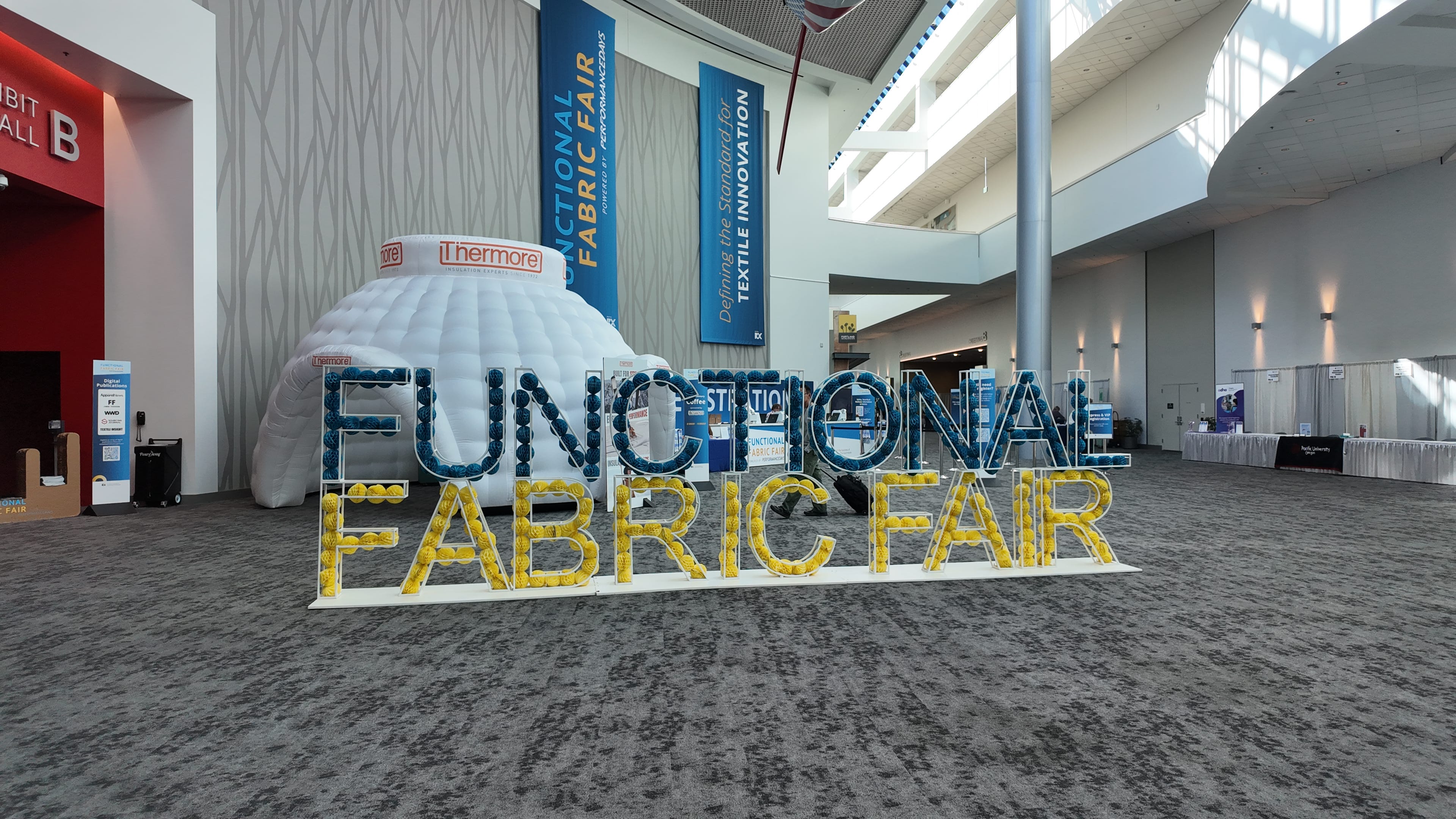
That’s the supply chain behind almost every piece of performance activewear you own, and almost nobody talks about it. I spent two days at Functional Fabric Fair learning how it works, because I’m building something — more on that soon — and if I’m going to make something worth wearing, I need to understand what it’s actually made of.
This is Part 1 of three. I’m writing it for anyone who’s curious about what “doing the research” looks like at the founder stage — before the product exists, before the brand is public, when it’s just you and a tote bag and a hall full of people who’ve been doing this for 30+ years.
The thing that surprised me most
I went in thinking fabric was something you selected. Turns out, for a small founder, it’s something you negotiate.
Every mill at the show has a minimum order quantity — an MOQ. The number of metres you have to buy before they’ll work with you. For most of the European mills on the floor, that number was 300–350 metres per colourway.
Per. Colourway. 🤯
For a brand in its first prototype phase, that’s somewhere between a lot and completely unrealistic.
Scott, a floor contact who spent twenty minutes orienting me when he didn’t have to, put it plainly: “There are a lot of Japanese mills here that will do more custom, smaller-batch sampling. The tradeoff is it’ll be significantly more expensive than off-the-shelf options.”
When I heard this I thought: that’s the founder’s dilemma in one sentence. Custom means expensive. Accessible means accepting a fabric that already exists. And for a brand with a specific story to tell — natural fibres, performance, sustainability — “off the shelf” isn’t really the answer.
I'll get into what that means for my brand in Part 2.
What I learned about merino in one long booth conversation
One of my first real education moments came at a German yarn spinner’s booth — a company that supplies some of the most recognizable performance and outdoor brands in the world. What I learned was that they don’t make fabric. They make the yarn that mills use to make fabric. The distinction matters more than it sounds when you’re trying to trace a supply chain.
Their merino was 18.9 microns. Micron count measures the diameter of the fibre — lower means finer, finer means softer against skin. Most performance merino used in activewear sits between 17 and 19 microns. This particular yarn, their washable grade, felt like what I wrote in my voice memo as “cool hair, with stretch.”
Two certifications came up repeatedly at their booth, and kept coming up for the rest of the show:
ZQ — a New Zealand certification verifying animal welfare, land stewardship, and farmer sustainability at the source.
RWS — the Responsible Wool Standard, broader in scope, internationally recognized. If you see these on a label and want to know whether the wool story behind a brand is real — these are the marks worth trusting.
They also showed me a 50/50 merino × Tencel blend that I’m still thinking about. Tencel is a brand name for Lyocell and Modal — both plant-based fibres, Lyocell from eucalyptus. The material is very light, very soft, and genuinely cleaner than synthetic alternatives. The Canadian rep offered to connect me with knitters who use their yarn when I’m ready to scale.
I wasn’t ready yet of course, but I took their card.
The find I wasn’t expecting
One of the most interesting conversations of the trip happened at a booth I almost walked past — a Japanese company with a North American presence and a proposition I hadn’t seen anywhere else on the floor: prototype through to manufacturing, handled by one partner.
Most of the supply chain is fragmented. You find a fabric. You find a mill. You find a cut-and-sew house. You manage the handoffs between them. This company was describing something closer to a single relationship, and they’d done it for small brands at runs of around 100 units.
I’ll cover this properly in Part 2, along with the Italian mills where things got interesting. One of them is working on a nylon made from corn, not petroleum. They’re currently in development with a major activewear brand you’d definitely know.
One more thing…
It’s scary enough going to a conference solo to learn about an industry you have no knowledge or business being in. I had nerves going into the morning and how I would spend my lunch that first day. But I didn’t expect to meet someone named Brett at lunch. He invented Beer Chips a few years ago — a beer-flavoured snack he took from concept all the way to Walmart and Whole Foods during his own sabbatical — and he sat down at my table in the conference hall like it was the most normal thing in the world.
Part 3 is mostly about that conversation, and what I learned from it as I continue building this from scratch.
Next: Part 2 — How I built a framework for evaluating suppliers when you have no buying power, and the nylon made from corn that I can’t stop thinking about… :)
I'm documenting the whole build here on Good Ground — fabric sourcing, prototypes, the decisions I'm second-guessing. If you want a front row seat before this goes anywhere else, subscribe below. When the product is ready, subscribers hear first.
Thanks for being here!
— Terri x
EEEK how exciting. Can’t wait to read more!