

01 | September TILOMM
Things I learned off my mat this month ✨

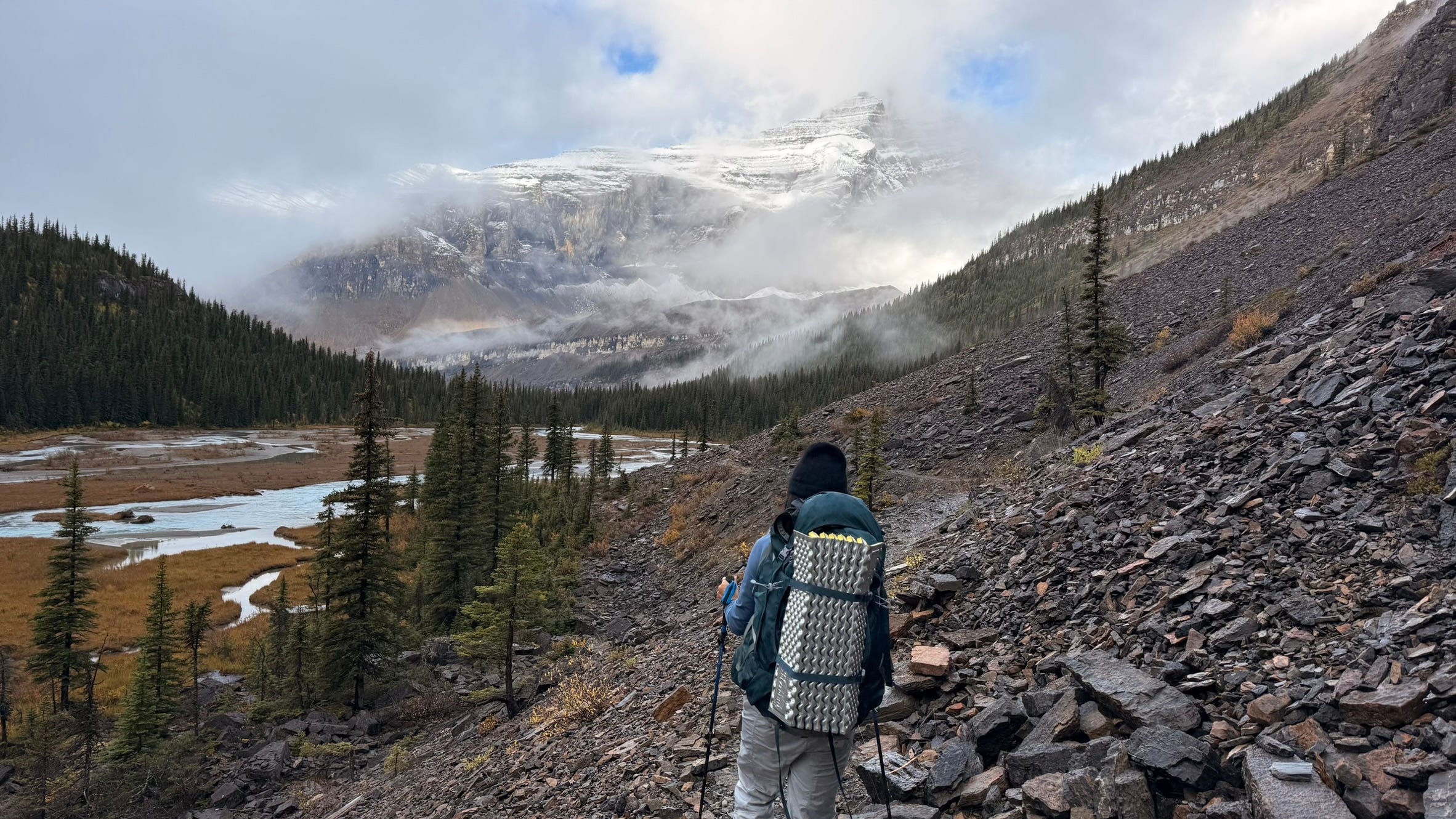
With summer slowly coming to an end, I’ve had more time the past two weeks to reflect than most. After a busy summer and an entire four days in the Canadian Rockies, I’ve had my share of off-grid time to rest and reflect.
As a yoga and mindfulness student & teacher, I’ve always known that there’s much to learn off the mat as on the mat. Here are my reflections from the past few week in a new series called: Things I learned off the mat this month.
1. It’s courageous to do one thing, it’s cowardly to do everything
Lately, I’ve been feeling stretched thin. Trying to do more and prove to myself that quitting my job was a good idea. To be honest, trying to do everything all at once will amount to very little. It’s the same as giving in to scattered brain or distracting thoughts while on the yoga mat. Just as you use a single-pointed focus to bring your attention back to the present while on the mat, simplifying in life’s goals and pursuits reaps the same benefits.
In yoga philosophy, this distracted mind is known as the “monkey mind” or “citta vrtti” in Sanskrit. “Citta” refers to consciousness or memory, and “vrtti” means “waves”. Together, they translate to “waves of thought” or “mind chatter,” often visualized as a restless monkey jumping from branch to branch. In yoga philosophy, a calm mind is a the goal, and the practice is to control or quiet these mental waves both on and off the mat.
How do I know if I have a scattered mind?
You’re constantly restless. Your feel agitated and struggle to focus.
You’re easily distracted. Your thoughts jump quickly from one topic to the next, making sustained attention challenging.
You get lost in stories. A scattered, anxious mind is often consumed by personal narratives that may not be true.
You’re stressed. Your overwhelm creates an inability to find calm.
Noticing my monkey mind this month has helped me understand my bias towards doing more, taking on too many things all at once. Since this awareness shift, I’ve addressed my citta vrtti through a combination of: regular mindfulness practices (like noticing colours around me or grounding), breathwork (like box breathing), and journalling.
Ask yourself:
Are you climbing one mountain or an entire mountain range?
Where does your focus lie currently?
How do you spend your time each week? Each day?
2. Choose love over fear
Every single event in life is an opportunity to choose between love and fear. When you open your heart and choose love every time, you can only show up as your best self in whatever you choose to pursue.
When I take a moment to choose love over fear, it reminds me that I can approach everything I want out of life through a more devoted, positive lens.
In yoga, tapas, one of the internal observances that make up the second limb of yoga, translates to a fiery, inner discipline and willpower to achieve spiritual growth. It is the commitment to showing up for your practice and goals, enduring challenges not from ego, but from your devotion: a love and a deep belief in the power of consistent effort for a greater good.
Ask yourself:
At any given event or opportunity, ask yourself what do you feel?
Then ask yourself, can I choose love over fear? This is especially difficult if the event causes negative emotions, but it’s even more crucial that you do this.
3. Breaks are the best form of self care
Anxiety can come in many forms and can ebb and flow as you grow through different seasons of life. Heart palpitations. Racing thoughts. Inability to focus on one thing. This is at the core of why I turned inward to better understand where my anxiety was even coming from.
What’s helped me reduce the friction here is through slowing down, taking breaks and truly resting.
I recently learned that there are 7 types of rest beyond sleeping, and all of them are equally important to nourish your mind, body and soul.
They are:
Physical rest. This is restoring your body’s energy. When I came back from hiking 4 days in the backcountry, I needed this more than ever.
Mental rest. When you’re brain is working nonstop, it needs its own rest. Giving your brain a chance to refuel could look like: doing laundry, going for a walk, or colouring.
Emotional rest. Your emotions also need rest. This can look like setting boundaries and saying “no” to activities or people who drain you emotionally.
Social rest. This applies to everyone, not just introverts. Know when your cup isn’t full and take the time to say “no” to social activities that aren’t meaningful.
Sensory rest. Social media is demanding. With tech so accessible, this can look like turning on DND (do not disturb) and scheduling in off-grid time or nature walks.
Creative rest. Knitting, writing on Substack, and any activities that is less dmeanding on your creative brain is key here.
Spiritual rest. This applies if you have a religious or spiritual practice. Rest here can look like checking in with yourself and be more present in nature.
Ask yourself:
How often do I take breaks throughout the day?
When I rest, what does it look like if I’m not sleeping?
What do I do during a break? (i.e. walk, listen to music, clean, talk to a loved one, etc)
Am I incorporating different kinds of rest? If not, how can I start?
That’s it for this month! As always, hanks for being here.
— Terri